What Is a Mesoscale Discussion?
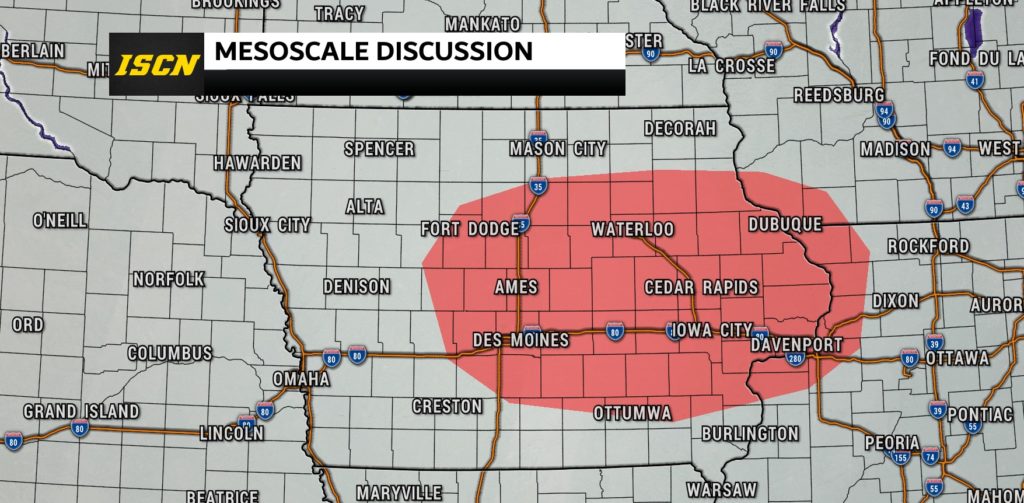
A mesoscale discussion (MD) is a short, focused weather update issued by the National Weather Service through the Storm Prediction Center to explain what’s happening right now in the atmosphere and what could happen next. It zooms in on a specific region—often before watches or warnings are issued—and gives insight into whether severe weather is becoming more likely. Think of it as an early signal that something may be developing.
Why Does This Matter?
If you live in a place like Iowa or anywhere across the Midwest, a mesoscale discussion can quietly give you a head start before storms become dangerous. It’s not loud like a warning, and it doesn’t interrupt your day, but it’s often the first sign that forecasters are seeing something worth paying attention to.
In real-world terms, this can mean the difference between being caught off guard and being ready. Many of the higher-impact days I’ve tracked started with nothing more than a mesoscale discussion and a subtle shift in the atmosphere. Within an hour or two, those same setups turned into severe thunderstorms or tornado warnings. That early window matters.
How a Mesoscale Discussion Works (Step-by-Step)
Everything starts with the atmosphere showing subtle changes. Forecasters are constantly monitoring temperature, humidity, wind patterns, and how air is moving at different levels. On certain days, those ingredients begin lining up in a way that raises concern, even if storms haven’t fully formed yet.
This is where the idea of “mesoscale” comes in. Instead of looking at the entire country, meteorologists narrow their focus to a smaller region—maybe part of a state or a multi-state area—where conditions are becoming more favorable for severe weather. It’s not your exact neighborhood, but it’s much more targeted than a national outlook.
At that point, the Storm Prediction Center issues a mesoscale discussion. The goal is to communicate what they’re seeing in real time. The discussion usually starts with a readable summary that explains the concern, followed by more technical reasoning behind it. Often, it will also hint at whether a watch may be issued soon.
From experience, this is the moment where awareness should shift. You may not see storms yet, but the atmosphere is being watched closely. In many cases, storms begin to develop or intensify shortly after the discussion is released. If everything continues trending in the same direction, a tornado watch or severe thunderstorm watch often follows.
That said, it’s important to understand that not every mesoscale discussion leads to severe weather. Sometimes the atmosphere doesn’t fully come together. But when it does, the MD is usually one of the first breadcrumbs that something bigger is on the way.
What a Mesoscale Discussion Is Really Telling You
When you read a mesoscale discussion, you’re essentially getting a behind-the-scenes look at the thought process of forecasters. It’s not just about what might happen—it’s about why it might happen.
The most important takeaway is whether your area is included and how soon things could develop. Timing is key. If the discussion mentions storms forming within the next few hours, that’s a sign to start paying closer attention. The type of threat also matters. Some discussions focus on large hail or damaging winds, while others specifically highlight tornado potential.
The wording itself can tell you a lot. When forecasters start using phrases that suggest increasing confidence or mention that a watch is likely, it usually means conditions are trending in a more serious direction. Even if the technical language feels overwhelming, the overall tone is often enough to understand the level of concern.
Common Mistakes or Misconceptions
One of the biggest misunderstandings is thinking a mesoscale discussion is the same as a warning. It’s not. It doesn’t mean severe weather is happening right now, and it doesn’t mean you need to take immediate shelter. Instead, it’s a signal that the environment is becoming favorable and that things could escalate.
Another common mistake is ignoring it because there’s no watch yet. Some of the most active severe weather days don’t start with alarms—they start quietly. Waiting until a warning is issued can leave very little time to react, especially if storms develop quickly.
People also tend to assume that if nothing happens, the forecast was wrong. In reality, forecasting is about probabilities. A mesoscale discussion highlights a real risk based on current conditions, but the atmosphere doesn’t always follow through. That doesn’t make the discussion inaccurate—it reflects how close the environment was to producing severe weather.
Expert Tips Based on Real Experience
From years of forecasting and running live storm coverage across Iowa, I treat mesoscale discussions as a turning point in the day. It’s when I shift from casually monitoring conditions to actively watching for development.
The best way to think about it is like a yellow light. You don’t slam on the brakes, but you don’t keep driving without paying attention either. It’s a cue to stay alert and start checking radar more frequently.
Some of the most dangerous days follow a pattern where a mesoscale discussion is issued, a watch is released soon after, and storms rapidly intensify. These are the setups where things can go from calm to severe in a short amount of time. If you’ve already seen the MD, you’re not playing catch-up.
Evening and nighttime discussions deserve extra attention. Visibility is lower, people are less aware, and storms can become more dangerous when fewer people are paying attention. In those cases, that early signal becomes even more valuable.
FAQ: Straightforward Answers
A mesoscale discussion is not the same as a watch. It comes earlier and explains the reasoning behind what might happen next.
You don’t need to take immediate action when you see one, but you should start paying closer attention and be ready in case conditions worsen.
Most mesoscale discussions focus on a short window of time, usually just a few hours, because they deal with rapidly changing conditions.
Not every mesoscale discussion leads to severe weather, but many of them precede watches and warnings, especially on active days.
You can find them directly from the Storm Prediction Center or through local weather sources that share and explain them in simpler terms.