What Is a Downburst? Causes, Damage, and How It Differs From Tornado
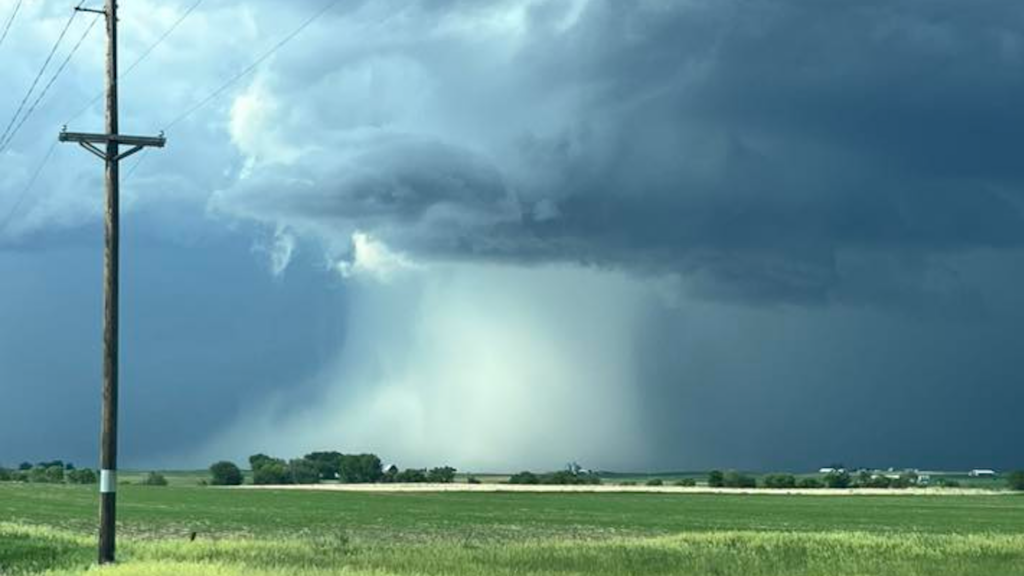
A downburst is a powerful column of sinking air that descends from a thunderstorm and spreads outward when it reaches the ground, producing damaging straight-line winds that can exceed 100 mph.
While tornadoes often receive the most attention during severe weather events, downbursts are actually responsible for a significant portion of thunderstorm wind damage across the United States each year. These intense wind events can topple trees, damage homes, overturn vehicles, and create destruction that is sometimes mistaken for tornado damage.
As meteorologists and storm spotters track severe thunderstorms across Iowa and the Midwest, understanding what a downburst is—and how it differs from other severe weather phenomena—can help you better prepare when storms approach.
Quick Answer: What Is a Downburst?
A downburst occurs when rapidly sinking air inside a thunderstorm accelerates toward the ground and then spreads outward in all directions upon impact.
Think of pouring a bucket of water onto a concrete driveway. The water falls downward and then splashes outward. A downburst behaves similarly, except the “splash” consists of powerful winds capable of causing widespread damage.
Downbursts are classified as:
- Microbursts: Less than 2.5 miles wide
- Macrobursts: Greater than 2.5 miles wide
Both can produce wind speeds comparable to a weak tornado, but the damage pattern is very different.
How Does a Downburst Form?
Downbursts develop inside strong thunderstorms when air begins descending rapidly toward the ground.
Several processes contribute to their formation:
1. Rain and Hail Drag Air Downward
As heavy rain and hail fall through the storm, they pull surrounding air downward through a process known as precipitation loading.
The heavier the precipitation, the stronger the downward pull.
2. Dry Air Enhances Cooling
Many severe thunderstorms contain layers of dry air aloft.
When rain falls through this dry air, some of the water evaporates. Evaporation cools the surrounding air, making it denser and heavier.
Because cool air is denser than warm air, it accelerates downward toward the ground.
3. The Air Slams into the Surface
Once the descending air reaches the ground, it can no longer move downward.
Instead, it spreads outward rapidly in all directions, creating a burst of destructive straight-line winds.
The strongest winds often occur near the leading edge of the spreading air mass.
What Happens During a Downburst?
People experiencing a downburst often report:
- A sudden increase in wind speed
- Heavy rain or hail
- Rapidly falling temperatures
- Blowing debris
- Reduced visibility
- Tree limbs breaking or entire trees falling
Unlike tornadoes, which produce rotating winds around a central circulation, downbursts generate winds that move outward away from the point of impact.
This outward-moving wind can produce extensive damage across neighborhoods, farms, and communities.
In extreme cases, wind speeds can exceed 100 mph and rival those found in some tornadoes.
How Long Does a Downburst Last?
Most downbursts are relatively short-lived weather events. Microbursts typically last between 5 and 15 minutes, while larger macrobursts generally persist for 5 to 30 minutes. In some cases, particularly intense downburst events can continue for 30 minutes or longer. Although the strongest winds often occur for only a few minutes, the damage they leave behind can extend for miles, creating a much larger footprint than their brief duration might suggest.
What Is the Difference Between a Downburst and a Tornado?
One of the most common misconceptions is that downbursts and tornadoes are the same thing.
They are very different atmospheric processes.
Downburst
- Winds move outward from a central point
- Produces straight-line wind damage
- Usually accompanied by heavy rain
- No rotating column reaching the ground
- Damage pattern spreads away from the impact point
Tornado
- Winds rotate around a central circulation
- Produces convergent damage patterns
- May occur with little or heavy rain
- Rotating funnel extends from the thunderstorm to the ground
- Damage often appears twisted or chaotic
Damage Pattern Comparison
One of the key ways meteorologists determine whether storm damage was caused by a tornado or a downburst is by examining the pattern of fallen trees and debris. In a downburst, powerful winds spread outward from a thunderstorm, typically causing trees to fall in the same general direction. Tornado damage, on the other hand, often displays a more chaotic pattern, with trees and debris scattered in multiple directions due to the storm’s rotating winds. This difference in damage patterns is one of the primary tools used by the National Weather Service when conducting post-storm damage surveys to determine the type of wind event that occurred.
What Is the Difference Between a Downburst and a Squall Line?
Another weather term that is often confused with downbursts is a squall line.
While both can produce damaging winds, they are not the same thing.
What Is a Squall Line?
A squall line is a long, narrow line of thunderstorms that forms ahead of or along a cold front and moves across an area as a connected system.
Squall lines can stretch for hundreds of miles and often produce:
- Damaging straight-line winds
- Heavy rainfall
- Frequent lightning
- Large hail
- Embedded tornadoes
On radar, a squall line appears as a continuous or nearly continuous line of thunderstorms.
Some of the most significant severe weather outbreaks in the Midwest occur when powerful squall lines sweep across multiple states.
What Is a Downburst?
A downburst is a localized wind event that occurs when rapidly sinking air from a thunderstorm crashes into the ground and spreads outward.
Unlike a squall line, which is an entire thunderstorm system, a downburst is a specific phenomenon occurring within or beneath a thunderstorm.
Key Difference
A squall line is the storm itself. A downburst is a burst of damaging wind produced by a thunderstorm. A single squall line may contain dozens or even hundreds of individual downbursts as it moves across a region.
Can Squall Lines Produce Downbursts?
Yes. In fact, many downbursts occur within squall lines.
As intense thunderstorms within the line produce heavy rain, hail, and strong downdrafts, localized downbursts can develop and create pockets of extreme wind damage.
This is why wind damage during a squall line is often uneven. One neighborhood may experience 50 mph winds, while another just a few miles away experiences a downburst with wind speeds exceeding 80 or 90 mph.
Damage Pattern Comparison
Squall Line Damage
Damage caused by a squall line is often widespread and can extend for many miles along the path of the storm system. Because squall lines consist of a long line of thunderstorms moving together, the resulting wind damage typically follows the direction and track of the storm line. These events can impact large geographic areas, sometimes affecting multiple counties or even several states as the line progresses.
Downburst Damage
Downburst damage is generally more concentrated and localized than damage caused by an entire squall line. When a powerful downdraft descends from a thunderstorm and strikes the ground, the wind spreads outward in all directions from the point of impact. This can create a concentrated swath of severe damage within a relatively small area. Although downbursts may occur within larger severe weather events, they are often responsible for some of the most intense pockets of wind damage.
Relationship Between Squall Lines and Downbursts
While squall lines often receive attention because of their widespread impacts and long-lasting nature, some of the most severe wind damage within these systems is frequently caused by individual downbursts embedded within the line. As a result, storm survey teams often look closely at damage patterns to determine whether the destruction was caused by the broader squall line winds or by a more localized downburst event.
Can Downbursts Be Dangerous?
Absolutely. Many people underestimate downbursts because they are not tornadoes, but these powerful wind events can produce damage comparable to that of a weak tornado. Strong downbursts are capable of damaging roofs and siding, snapping utility poles, causing widespread power outages, destroying crops, overturning recreational vehicles, and bringing down large trees. In some cases, the resulting damage can be extensive and costly, particularly when the strongest winds are concentrated over populated areas.
Downbursts are also a significant concern for aviation. Their sudden and intense changes in wind speed and direction can create dangerous conditions for aircraft, especially during takeoff and landing. In fact, downbursts became a major focus of aviation meteorology after several aircraft accidents in the 1970s and 1980s were linked to microbursts. These tragic events led to major advances in weather detection technology and pilot training.
Today, airports across the United States utilize sophisticated weather monitoring and detection systems designed to identify microbursts and other hazardous wind phenomena. These systems provide timely warnings to air traffic controllers and pilots, helping to reduce the risks associated with sudden and powerful downdraft winds. As a result, aviation safety has improved significantly, even as meteorologists continue to study and better understand these powerful weather events.
How Common Are Downbursts in Iowa?
Downbursts occur regularly across Iowa during the spring and summer severe weather season.
The greatest risk typically exists when:
- Temperatures are hot and humid
- Thunderstorms produce heavy rainfall
- Strong instability is present
- Dry air exists in the middle levels of the atmosphere
Many of Iowa’s most significant severe weather events involve damaging straight-line winds from downbursts rather than tornadoes.
Because downbursts can occur suddenly and produce tornado-strength wind speeds, they should be taken just as seriously as other severe thunderstorm threats.
How Can You Stay Safe During a Downburst?
If a Severe Thunderstorm Warning is issued:
- Move indoors immediately.
- Stay away from windows.
- Avoid seeking shelter under trees.
- Secure outdoor furniture and loose objects before storms arrive.
- Monitor trusted weather sources for updates.
- Treat severe thunderstorm warnings as seriously as tornado warnings when destructive winds are expected.
The strongest downbursts can produce winds capable of causing significant structural damage and creating dangerous flying debris.
Frequently Asked Questions
Is a downburst stronger than a tornado?
Most downbursts are weaker than strong tornadoes, but the most intense downbursts can produce wind speeds exceeding 100 mph and rival weaker tornadoes.
Can a downburst happen without a tornado?
Yes. Downbursts and tornadoes are completely separate weather phenomena and frequently occur independently.
Is a microburst the same as a downburst?
A microburst is a type of downburst. The term microburst refers specifically to a downburst less than 2.5 miles wide.
Can weather radar detect downbursts?
Meteorologists can identify storm environments favorable for downbursts and detect radar signatures associated with them, but the actual wind event occurs at the surface.
Are downbursts common during severe thunderstorms?
Yes. Downbursts are one of the most common sources of damaging thunderstorm winds.
Story Image: Michelle Spack